

If you caught Part I of this story then you already know the beauty and splendor that is Isla Isabel. If you didn’t, you need to check that out. (Click Here for Part I) And yes, the shore adventure was spectacular to say the least. The birds and iguanas combined with the beautiful views would have been enough for me to say this is a place no one should miss but then no trip to Isabel would be complete without some snorkeling or diving in her magnificent, clear blue waters.
After our morning hike around the island we headed back to Dazzler to cool off and enjoy a cool, refreshing Pacifico or two. There’s nothing better than an ice cold beer after a hot and steamy trek through the jungle. We took a break, sat in the cockpit and enjoyed the views for a while. It was a wonderful day and we were the only ones in the anchorage. It was just us, the ocean and the wildlife. There’s something so special about being in an anchorage when there isn’t another soul in sight. I’ve said it before and I’ll say it again…it makes me feel like an ancient explorer. Well, let’s just leave my age out of this!
 Being able to see the all the fish from above was wonderful to be sure but we finally decided it was time to take a peek at the undersea world of Isabel.
With the monoliths less than a hundred feet from our stern we didn’t even need to fire up the dink. We just donned our lycra suits, grabbed our gear and jumped in the water. For those who aren’t familiar with lycra suits, we use them almost every time we go snorkeling. We had ours made in La Paz by a lady named Katty at the beginning of the summer. She charged about 800 pesos which at the time was about $40 USD. Not too bad for a custom made suit. They look like a wetsuit…only a bit more fashionable and the are made of lycra. They aren’t meant to provide warmth rather a thin layer of protection from jellyfish and other such stinging undersea creatures. I am allergic to bee stings and while I’m not certain if a jellyfish sting would give me the same reaction we don’t see any reason to take a chance. Also, in the Sea of Cortez there are these little jellyfish that look like tiny, floating, purple eggs. Their sting is extremely painful and it’s easy to swim into a swarm of them without even noticing because they are so tiny.k
 Suited up and ready to go we leaped into the water. WOW! That was really nice. First a few frosty cold ones to chill our insides and now a splash in the water to cool the outside. Yes, this was shaping up to be quite a wonderful day.
The water clarity made for some amazing snorkeling around the monoliths. We saw trumpet fish, sergeant majors, parrot fish, a turtle and a host of other colorful sea creatures. One thing I did notice, however, is we didn’t see even one ray. In the Sea of Cortez you could hardly get in the water without running into a few or even a few hundred of them. The further south we’ve come the less and less of them we see.
Isabel is as beautiful and magical underwater as she is on land and I’m sure I could spend a lot of time telling you about how beautiful it was beneath the surface but then I’m not that good of a story teller so here’s some photos and a short video of our day here.
Watch Our Isla Isabel Video…Click Here
After our snorkeling adventure we showered and prepared for a spectacular dinner. Captain Dan jumped in the galley and made crab stuffed mushrooms with a balsamic, shallot reduction sauce. Oh yeah!


Yep, Isla Isabel will remain very near and dear to my heart! If you ever get a chance to see this place, do NOT pass it up! I promise you will not be disappointed.
Until next time,
Jilly
Make sure you follow us to receive emails when we update our blog.

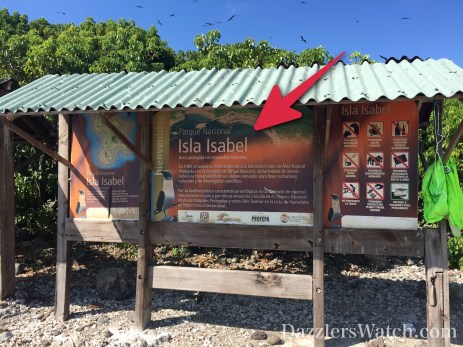 First let me begin by saying that some people call her Isla Isabel while others may refer to her as Isla Isabela. Isabela is what you might see on charts and plotters, however I have chosen to go with what the Mexican government calls her which is Isla Isabel. No matter what one chooses to call her, Isla Isabel is truly paradise on earth!
 Isabel is a volcanic island located approximately 15 miles from the west coast of mainland Mexico and 90 miles south of Mazatlán. The island is a little less than a half a mile wide and three quarters of a mile long and was deemed a National Park on December 8th, 1980. It’s often been said it was one Jacques Cousteau’s favorite places and that Cousteau himself actually made the recommendation to the Mexican government to designate this island as a National Park. He spent a great deal of time here and has aired many specials on this fabulous gem. One visit here is all it takes to understand his love for the island.
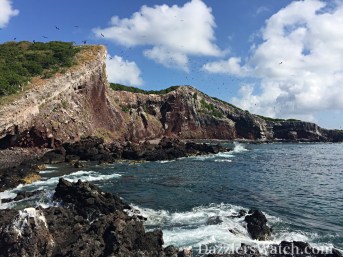 You can anchor your boat in the southern anchorage that is just east of the fishing village but you need to be cautious of the rocks. There are many. They are more like boulders than rocks and cruisers have been known to call them “anchor eaters”. We chose to anchor on the east side of the island near the monoliths and were glad we did because the swell hitting the southern anchorage was pretty big during our stay. The boats anchored there were really rockin’ and a rollin’. When we arrived at the island the Guardia del Parque (Park Guards) were there on their pangas to tell us where we could drop the hook. Apparently there are some coral beds on the east side of the island these days and they want to be sure the cruisers are not harming them.
 At first Dan wasn’t very happy about where we were told to drop the anchor as it was a bit close to the monoliths for our taste. When I say close, we were a little less than 300’ from the underwater shelf that surrounds them. As a rule we tend to anchor a bit further out so if weather comes in and we need to bug out we have a little extra room to maneuver but when in their waters you abide by their rules or you move on. That said we stayed where we were for three days and didn’t have any issues with the anchor dragging or getting caught on any rocks. Captain Dan does recommend that you put a float on your anchor line whether you are in the southern or eastern anchorage. This will help you to retrieve your anchor should it get caught in the anchor eaters.
 One day we took the dinghy ashore to explore the island. In the water as you approach the east end and of the fishing village you see these dome shaped objects just below the surface. They are underwater habitats for lobster and other small fish. Once you reach the shore you will see a dozen or so of these creations sitting on the beach. I’d never seen or heard of such a thing before. The Mexicans are not particularly known for their concern over the ecosystem so it’s nice to see this, even if it is just a small attempt to help preserve the sea life.
 Dazzler's Watch