Category: June 2021

Tanks A Lot Part II

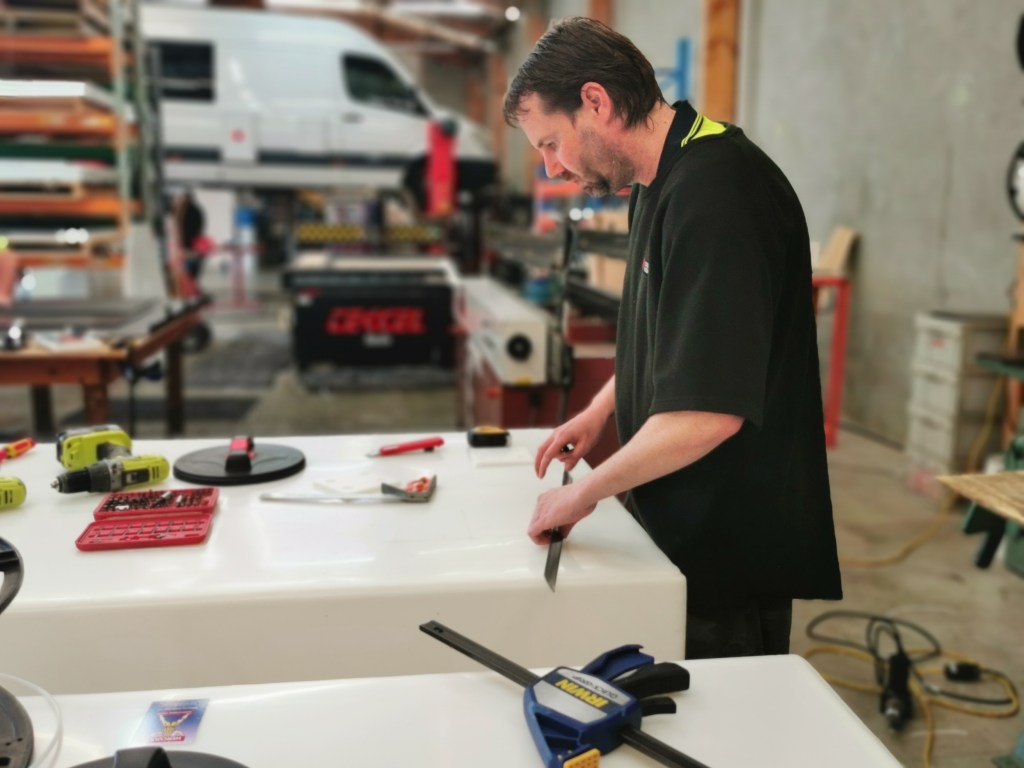
Before we left the area to take our driving tour we stopped by Hercules Tanks to view their facility and meet Frank,  the new owner.  What an incredible plant.  The fabrication facility is well laid, super clean out and Frank and Ryan both provided a wonderful dog and pony show of how the tank construction process results in a beautifully completed product.
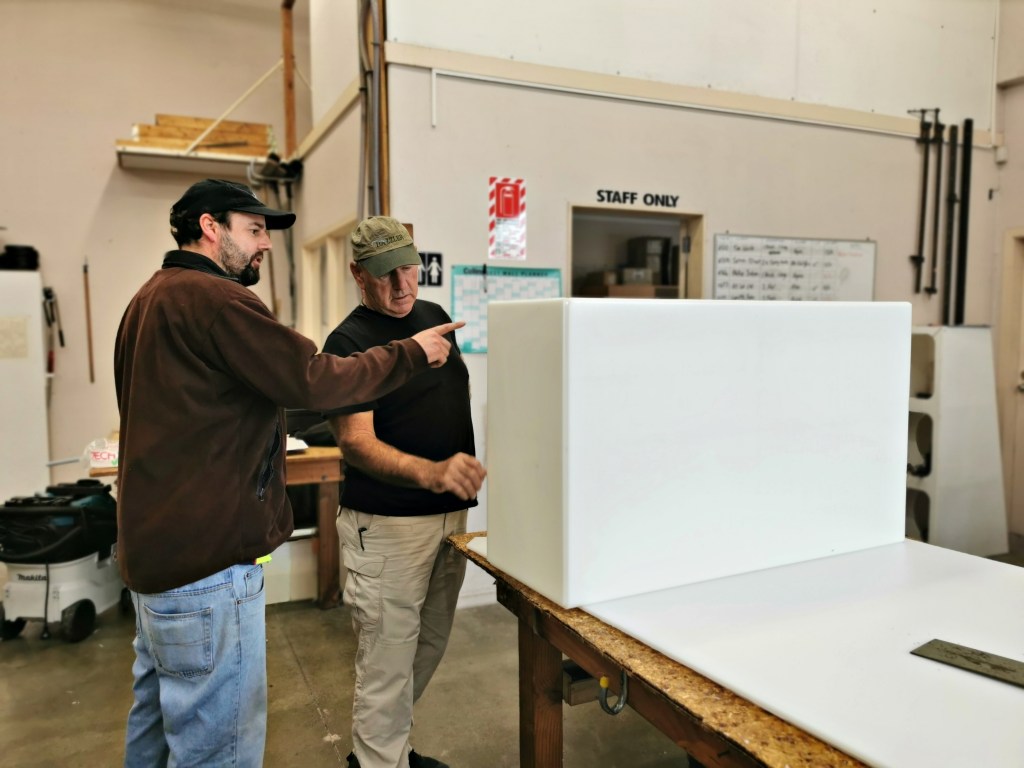
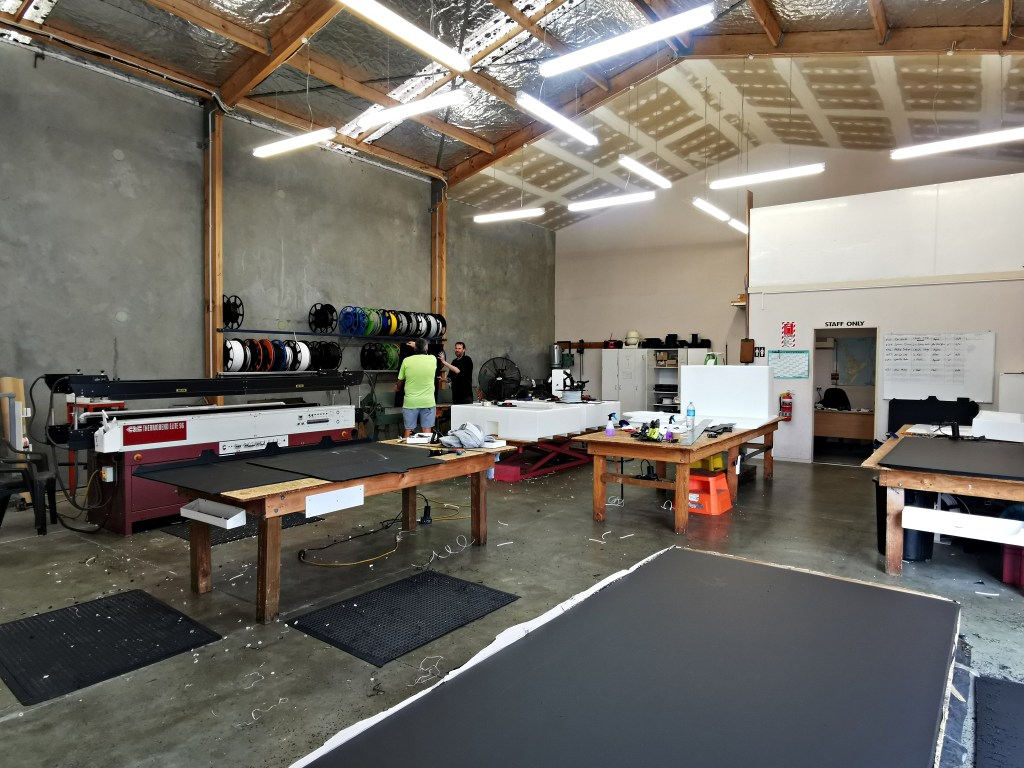
Knowing that the construction of our new tanks was in excellent hands we determined that we could have a very relaxing two week trip around the area.

Measure Twice

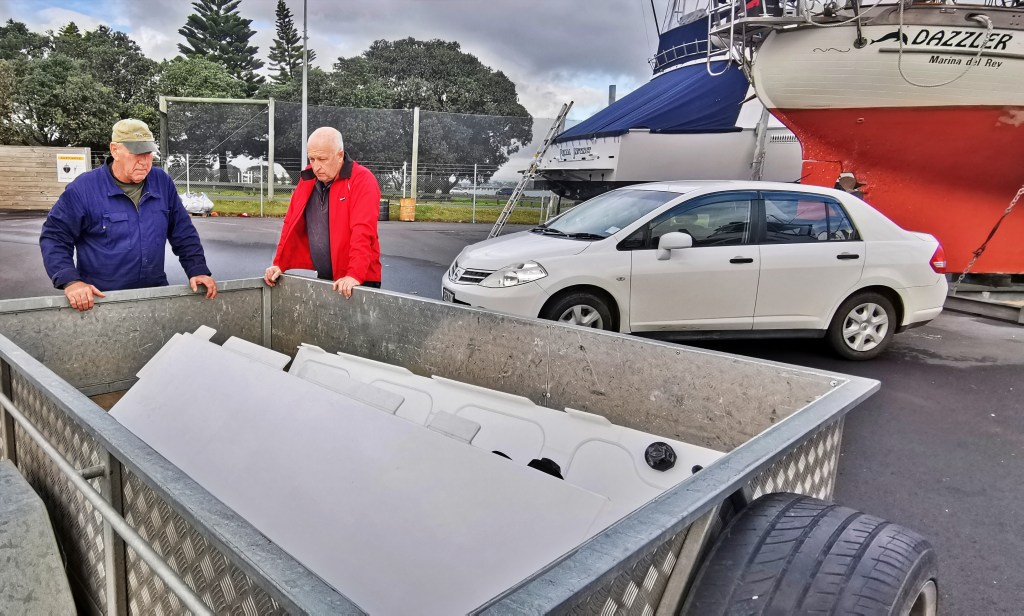
By the end of the first week I had given Frank a call to arrange for payment.  Frank asked if it was possible for Ryan to fit the port tank into Dazzler’s bilge to check measurements for the starboard tank.  We were in Waihi, less than an hour away from Dazzler.  We made plans to meet Ryan on Saturday morning with our partially completed port tank for a dry fit as well as a  measurement recheck for the starboard tank.  As it turns out, this was an excellent idea.  

Ryan had brought with him the end cutouts for the starboard tank for fitting and measuring.  The starboard tank end pieces were a bit wider than the space available.  Bottom line, this task and dry fit saved us some time.  If we had not done it we would have had a completed tank that would not fit into our bilge space which would have required a new tank to be manufactured.  Measure as many times as you can before cutting.  Then measure some more just to be sure.  

Fast forward to about a week later…  Our tanks were ready and delivered by Frank on Monday morning.  The tanks dropped into place and fit like the proverbial glove.  Now the detail work begins.  I had to make some cuts on a 2×4 to make the side rails that would be fiberglassed to the hull to keep the tanks from having any side to side movement.  The bottom of the forward edge of the tanks will be indexed in the bottom of the bilge against the aft compression post block.  
I did have to design and install blocks at the aft end of the tank to prevent a fore as well as aft movement while underway. I used a two inch block of starboard that I had in stores to fit at the bottom of the bilge. That fit tightly against the forward edge of the fuel tank and the aft edge of the water tank. I also used some wood blocks at the top of the tank to assist in preventing fore and aft movement.
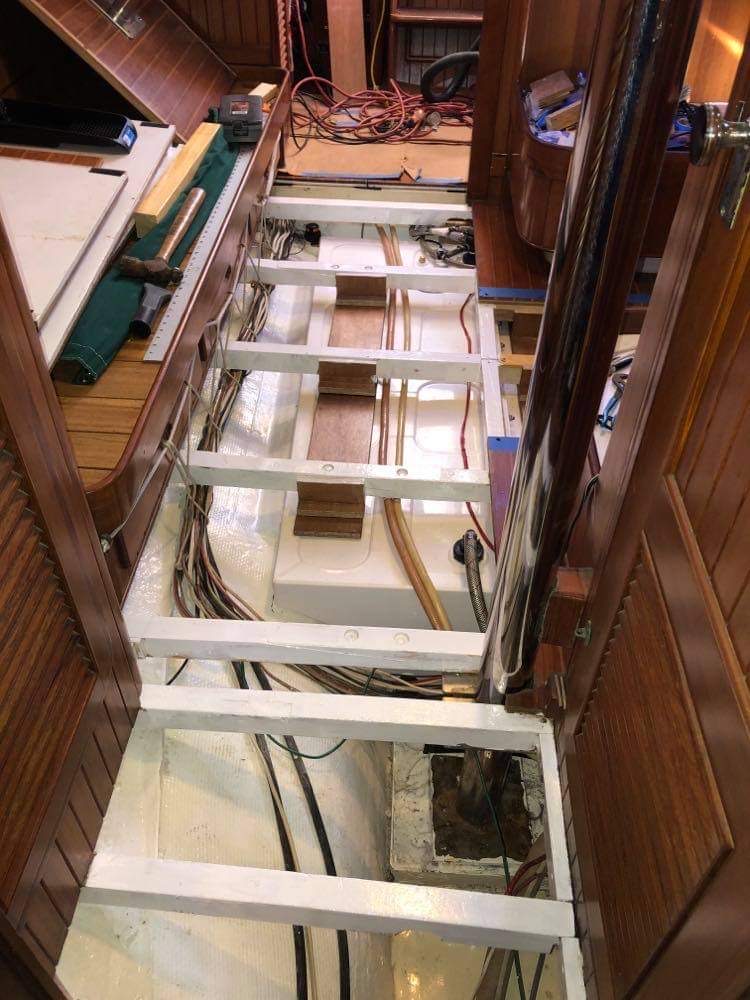
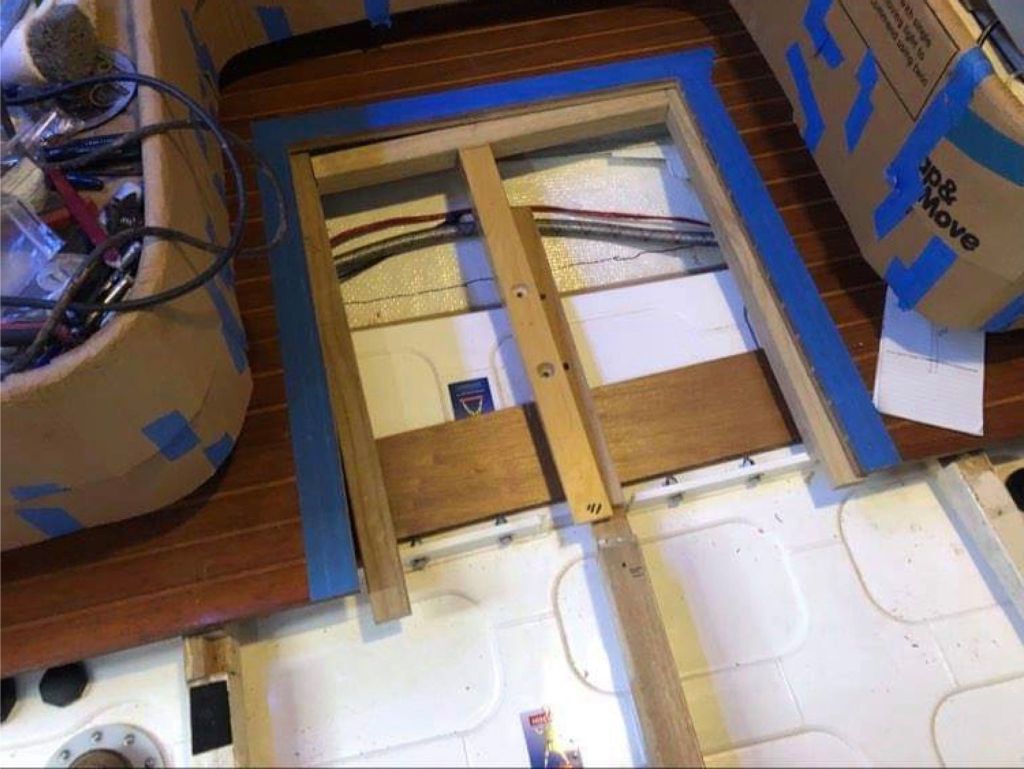
The next technical part was to install the wooden web of criss crossing wooden beams that integrated into the strings.  This elaborate design was to support the saloon floor table base and prevent any movement of the table.  Because of the way the table supporting pieces of timber locked into the stringers, I had to install the three main stringers at the same time.  Being mindful to keep all the pieces indexed and locked into their respective positions.  After several minutes everything was in place and ready for applying epoxy to the stringer scarf joints.  I had dry fit all the stringers and supports to ensure no last minute surprises.  One at a time the stringers were epoxied, bolted and clamped together.  

Next, I had to attach all the hose connections.  Vent hose, fill hose, pick up hoses, tank level sensor and crossover connection.  This all was straight forward and I only experienced a few glitches that were easily overcome.

It was now time for the last tank securing system.  I had obtained some ¾” marine plywood that I planned to rest on top of the tanks.  I had applied four coats of penetrating epoxy to the plywood to provide more water resistance.  I would measure, cut and attach short upright blocks of the plywood to press down on the top of the tank to help keep it indexed and help prevent it from bouncing up and down.  Not that I think it will, but Mother Nature on the big waters has a way of pointing out any design and installation flaws in short order.

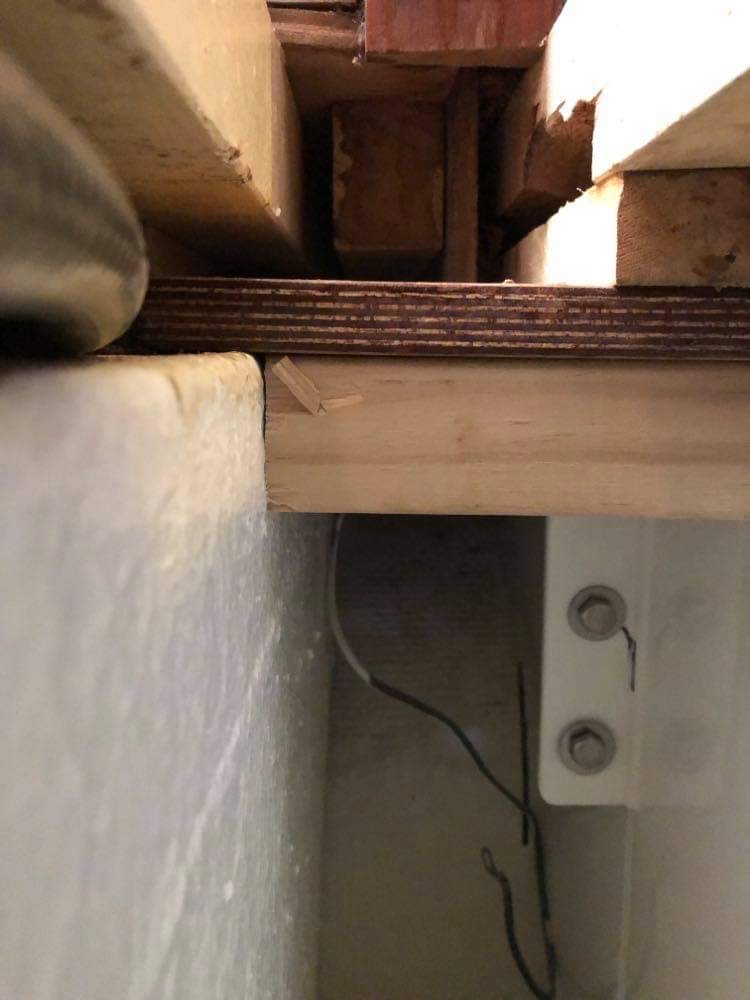
Last but not least.  I applied a coat of white paint to the stringers and the fiberglassed side planks for a nice clean look.  That’s it!  Finished!  It was a great undertaking that I’m glad to say is now behind us.  The finished Hercules tanks side by side locked and cocooned into Dazzler’s bilge area waiting to be filled with that elixir of life from Ponce de Leon’s fountain of youth.  Or the nearby tap.
Filling The Tanks For The First Time

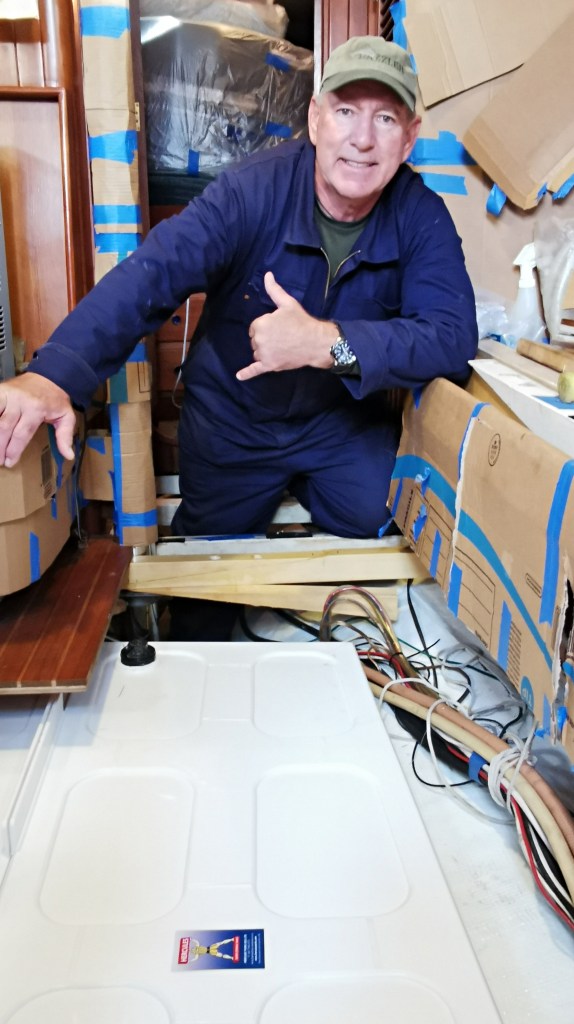
We were provided estimated measurements from Hercules Tanks, but we still had to know what our true finished capacity was inside the tanks.  I decided to fill the tanks by 20 liter (5 gallon) portable water tanks one at a time.  That way we could correlate our water gauge with the actual number of liters or gallons we have in the tank.  It took a while to complete but the results provided us with an accurate chart to gauge relationship.  Very important when your tanks are not a rectangular shape.  During the filling process I did give a quick look below the floorboards for any possible leaks from any of the hose connections.  None were found.  That’s always a good sign.

That’s it.  Dazzler is sporting a pair of new freshwater tanks so the cruising can continue.  Yahoo!  Thanks to our new friends at Hercules Tanks for helping make this project a lot easier.  Additional thanks to Dazzler’s best mate for Air B&B planning and having to deal with the total destruction and construction of the interior during the process.  We are looking forward to the next adventure.  Catch up with us next time in our favorite anchorage for a sundowner or swapping stories.

Cheers!

Captain Dan

Click Here to read Tanks A Lot Part I

Hamilton Gardens Button Photo

Hot Times At Orakei Korako Thermal Park

After yesterday’s gorgeous hike to Taranaki Falls we were expecting today to be just another average tourist experience. I mean honestly, how much better can it get than hiking in an area with snow capped volcanos, alpine scrublands, magnificent waterfalls and glistening streams? Seems pretty unlikely we could top that right? Well, we found a place that we’ve been assure will be truly spectacular so who knows? In fact, we rarely pay to visit tourist parks but we we’ve been assured we will enjoy some hot times at Orakei Korako Thermal Park today. 

I’d like to give you a little information on the geology of this area before I take you to the park. You see this part of New Zealand lies on top of a volcanic plate that sits directly above a vast underground lake of magma. For this reason the area is alive with some of the most incredible geothermal activity you’ve ever seen. The geothermal zone runs from White Island which lies off the eastern coast of New Zealand just north of the Bay of Plenty to Tongariro National Park in the South. In fact, the main highway that runs between Rotorua and Taupo is called the Thermal Explorer Highway.

Along this highway you will literally find dozens of places that have taken advantage of this natural phenomenon and turned them into parks that generate tens of millions of dollars in tourist revenue each year. Whether you’re looking to spend an afternoon in a steaming thermal pool, to cover yourself in hot mud or just to take a stroll around the boiling mud pools and rainbow colored silica terraces there is something for everyone. Of course it all comes with a price and our initial opinion on these places was that the price tag is a bit hefty. After all, most of the parks are just fenced in natural wonders.

We’ve found that New Zealand can be quite expensive when it comes to visiting the natural wonders or other tourist areas that seem boundless here. Just about every park or theater or museum has a hand out and they are very proud of what they have to offer. For this reason we’ve been a bit reluctant to shell out the cash to visit one of these thermal parks. If not for our friends, Lutz & Gabi, who told us it is worth every penny, we would have passed on the opportunity. Fortunately, they are very persuasive.

Orakei Korako Thermal Park

So this morning we woke up ready to check out the Orakei Korako Thermal Park. It’s a very cold but clear day. It’s so cold in fact that we awoke to frost on the ground. Brrrr! Dan’s not nearly as excited as I am about this journey but we both know it’s going to be worth it. Or, should I say we hope it will be worth it.  

The park is located just a half hour from our BnB. Because the entire area is filled with thermal activity and because it’s quite cold this morning the entire landscape is filled with white steam rising from the ground forming wispy clouds along the way. If nothing else, the drive is quite something. 

We’ve been told that Orakei promises to be one of the best thermal parks in the area. Of course at $42 NZD per person, it better be! It’s the middle of the week and we arrive just after they open. Turns out we are two of the first to arrive. There’s just two other cars in the parking lot and one surely belongs to the man running the store. He’s a  Māori man who looks to be in his 40s. He’s kind and soft spoken and welcomes us to the park. After taking our entrance fees he leads us out to the dock behind the building where we board the shuttle boat that will take us across the river to the thermal area.

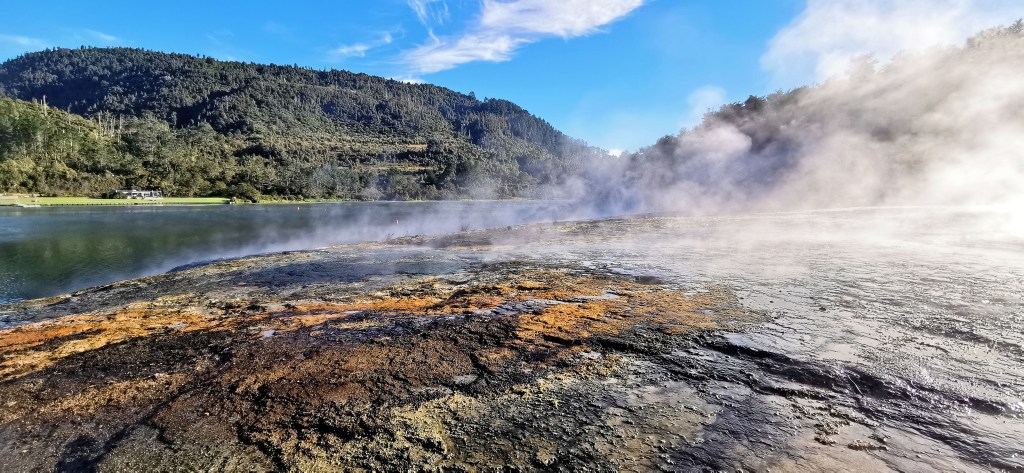
First off, the view across the lake to the steaming thermal terraces is simply stunning. There’s a white mist rising from the deep green forest that forms silky clouds as it rises into the vast, radiant sky. The fog lingers on the top of the quiet lake like a person trying to cling to a departed loved one and the sun, on the rise, is bright and full giving a warm sun kissed glow to everything it sees.

Orakei Korako Thermal Park

The ride across the lake takes just a few minutes and soon we are dropped off at the dock on the other side. We walk up the boardwalk unsure of what to expect when the forest gives way to an otherworldly scene. The silica terraces are a mixture of every earthy color you can imagine and milky colored vapor rises above it. We can feel the heat emanating from the earth’s core up through the cracks and crevices of the terraces. There’s an odor that reminds us of rotten eggs but for some reason it’s not as offensive as you’d think. Maybe it’s because our minds and eyes are so focused on the unreal sights around us that we don’t seem to care.

As we walk further up the boardwalk we continue to see the most magical sights. It seems everywhere we look there is another tantalizing treat for the eyes. The colors and textures blend together to create the most striking scenes where each small vignette is but a tiny part of one of God’s most impressive tapestries. We’re delighted to find that we are the only ones around and it allows us to capture some amazing images but none will ever be able to convey the magnitude of what it’s like to stand here in person.

Hot, Hot, Hot

There’s the colorful microbial mats of the Emerald Terrace that appear slick and wet as water between 39-59° C (120-138° F) easily glides across the surface. Thousands of years of running water has formed randomly places grooves and small pools in the mats. The water runs along these grooves to the lake below. 

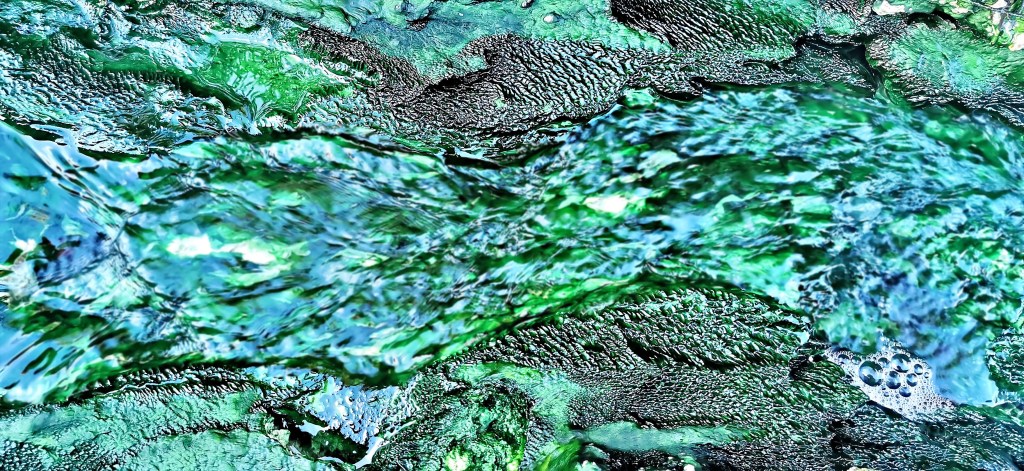
As we walk further along running water flanks the boardwalk. Underneath the clear fluid the bed is filled with green algae that is so vibrant it resembles a huge flawless emerald. Soon the area opens up again to a place aptly referred to as Rainbow Terrace. Much like Emerald Terrace this place is filled with colorful microbial mats. The backdrop, however, is Golden Fleece Terrace which is a draping of silica sinter that looks like mounds of snow and sharply carved ice. Yes, the “show” is simply stunning. 

The next stop is the Wairiri Geyser. This geyser erupts quite frequently sending water that is 70-90° C (158-194° F) bubbling to the surface creating a steam cloud so big it feels as if you’re standing in the heavens. It doesn’t shoot high into the sky like the Diamond Geyser which shoots water up to 9 meters (29 feet) into the air but it is extraordinary none the less.

The area known as the Artist’s Palette yields the most awe-inspiring views. Formed by hydrothermal eruptions occurring between 8,000-14,000 BC this is truly the “hot bed” of the park with its scalding hot mud pools and steam vents. In places the silica is less than 20 mm (just over half an inch) thick. Underneath lies water that would boil any human who dared to jump in. 

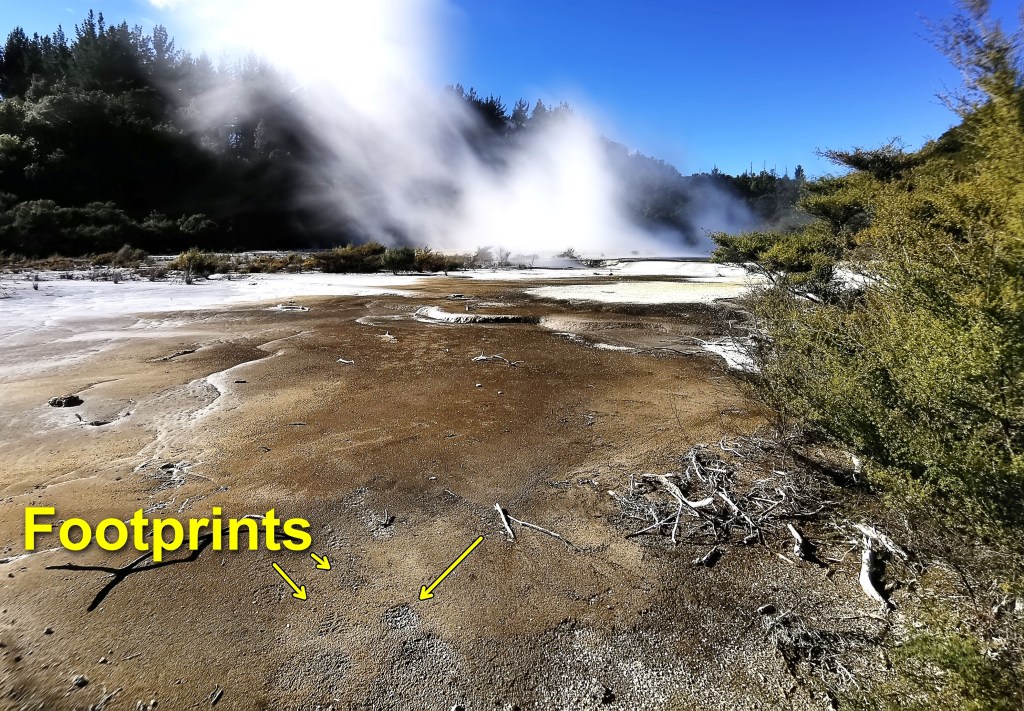
Interestingly enough we found that some scofflaw decided to take their chances crossing over the barriers to walk onto the silica bed. It appears they escaped unharmed which, I can’t say I’m overly happy about. After all, if you are dumb enough to take your chances despite all of the warnings then I say, “Let nature sort it out”

Of course, not surprisingly, we found that this same person must have decided they wanted to climb one of the muddy slopes along the trail and this time it seems they may have had a bit more trouble as there were slips along the slope with butt prints and muddy shoe prints leading away from the scene. Hopefully they learned a lesson but I’m not holding my breath.

Rautapu Cave

As we travel deeper into the park we come across steaming grey mud pools as well as alkali chloride pools that are ice blue and as clear as fine crystal. We continue to travel along the boardwalk and are rewarded with a chance to see Ruatapu Cave. This cave was formed by a volcanic eruption that occurred more than 100,000 years ago. Twenty-three meters (75 feet) below the surface lies Waiwhakaata (the pool of mirrors). The water in this pool is a balmy 40°C (111° F). 

From here we finish the loop through the forest dotted with steaming pools and vents. It takes us back to the main boardwalk where we find that more and more people have begun to descend upon the park. We’re glad to be leaving. We’ve had a wonderful experience at one of God’s most spectacular places and we had it all to ourselves. And, we can say without a doubt that this was the best $84 NZD we’ve spent at a tourist attraction in New Zealand!

Until next time,

Jilly & Dan

Click below to see the entire Orakei Korako Thermal Park Photo Gallery!

Want to know more about our land travels? CLICK HERE to read about our trip to Tongariro National Park.