
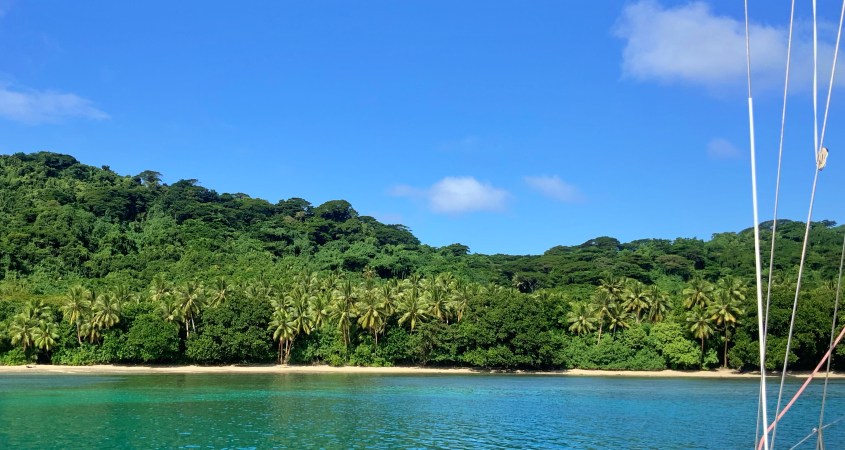
After the rollercoaster ride here to Rabi (pronounced “Rom BEE”) Island we were delighted to find an absolutely stunning anchorage to call home for a couple of days. It’s surrounded by a reef and the water inside the reef is clear and a lovely shade of aqua. We were all delighted with our decision to come here.
We were also exhausted from the trip so we decide to remain on our respective boats that night. Not long after we arrive the sun begins to set. The coconut trees are gently swaying in the breeze as the sun casts its golden light onto the shore. The deep gold color of the sand is a beautiful contrast to the bright blue sky, green palms and aqua blue waters. In this moment as we sit and enjoy a few sundowners we realize that all of the rough seas and bouncing about were definitely worth the effort.
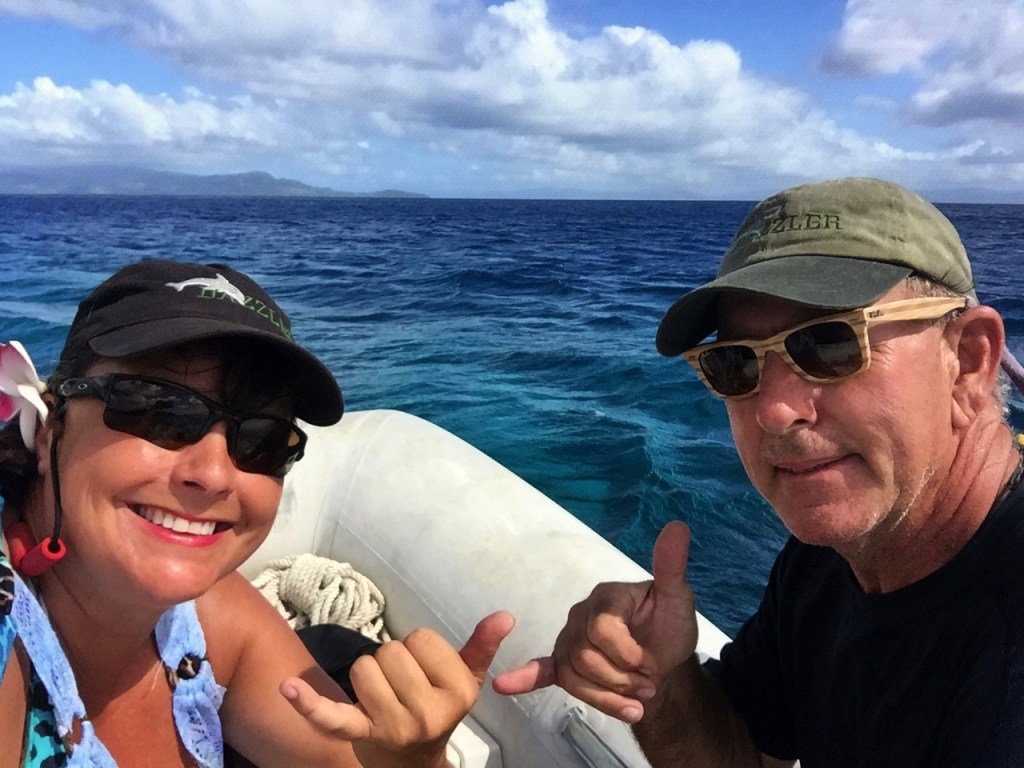
The following morning we awoke to a picture perfect day in paradise. The sun was shining brightly overhead and there was just enough wind to make sure it wasn’t too hot. Lutz & Gabi hopped in their dinghy and we in ours and we headed off to the village of Nuka just two miles away.

Here I should stop and give you a brief history lesson about this island as it’s very interesting even if it’s somewhat disheartening. You see, this island is not full of Fijians. No, its main inhabitants are Banabans. Who are they you ask? Well, Banaba also known as Ocean Island is a Pacific island located near the equator and is part of the Republic of Kiribati. In the mid 1800s a Tongan army conquered Fijian rebels on the island of Rambi. When they left the island a few years later they sold it to some Europeans to cover their many debts.
In 1900 a New Zealander by the name of Albert Ellis discovered phosphate on Banaba. These were considered the richest deposits of phosphate in the world at the time. Mr. Ellis worked for a London based company called Pacific Islands Phosphate Company. They ultimately exploited this newfound treasure as Ellis went around the island negotiating the purchase and lease of property for his company to use to mine the phosphate. Since the Banabans were simple-minded, highly trusting islanders the result was devastating to them. They ultimately sold a 999 year lease to PIPC for £50 per year. Yes, they were completely taken advantage of and ended up losing the rights to much of their island.
To add insult to injury during WWII the island was invaded and taken over by the Japanese. Once in control of the island the Japanese exiled the Banabans sending them to labor camps on islands such as Tarawa, Kosrae and Nauru. In these camps they were forced to do farm labor, growing crops to feed the Japanese forces in the Pacific theater.
At the conclusion of WWII the British came to these camps and “rescued” the Banabans sending them to the island of Rabi in Fiji, which is over 1300 miles from their homeland. This is the island we are now visiting.

The British claimed they were helping these people because their homeland was devastated by the Japanese. In fact, the mining had done more to devastate it than the wartime occupation of their enemies. They told them Rabi in Fiji had nicer homes and was a better place to live as it was a “land of plenty” filled with cattle, pigs and fields of coconut trees etc… They talked up the beautiful island saying it had plenty of water and rich soil to grow things. In actuality, the British appear to have lied to them on several accounts.
In their haste to take over Banaba and become wealthy from its phosphate deposits they simply dropped these people off with two months of provisions and food because remember, they claimed this to be a “land of plenty”. These people who had been in labor camps during the war were left in a fragile state with very little to keep them alive. The homes? They were hastily constructed military tents that provided little shelter from the much harsher elements in this region.
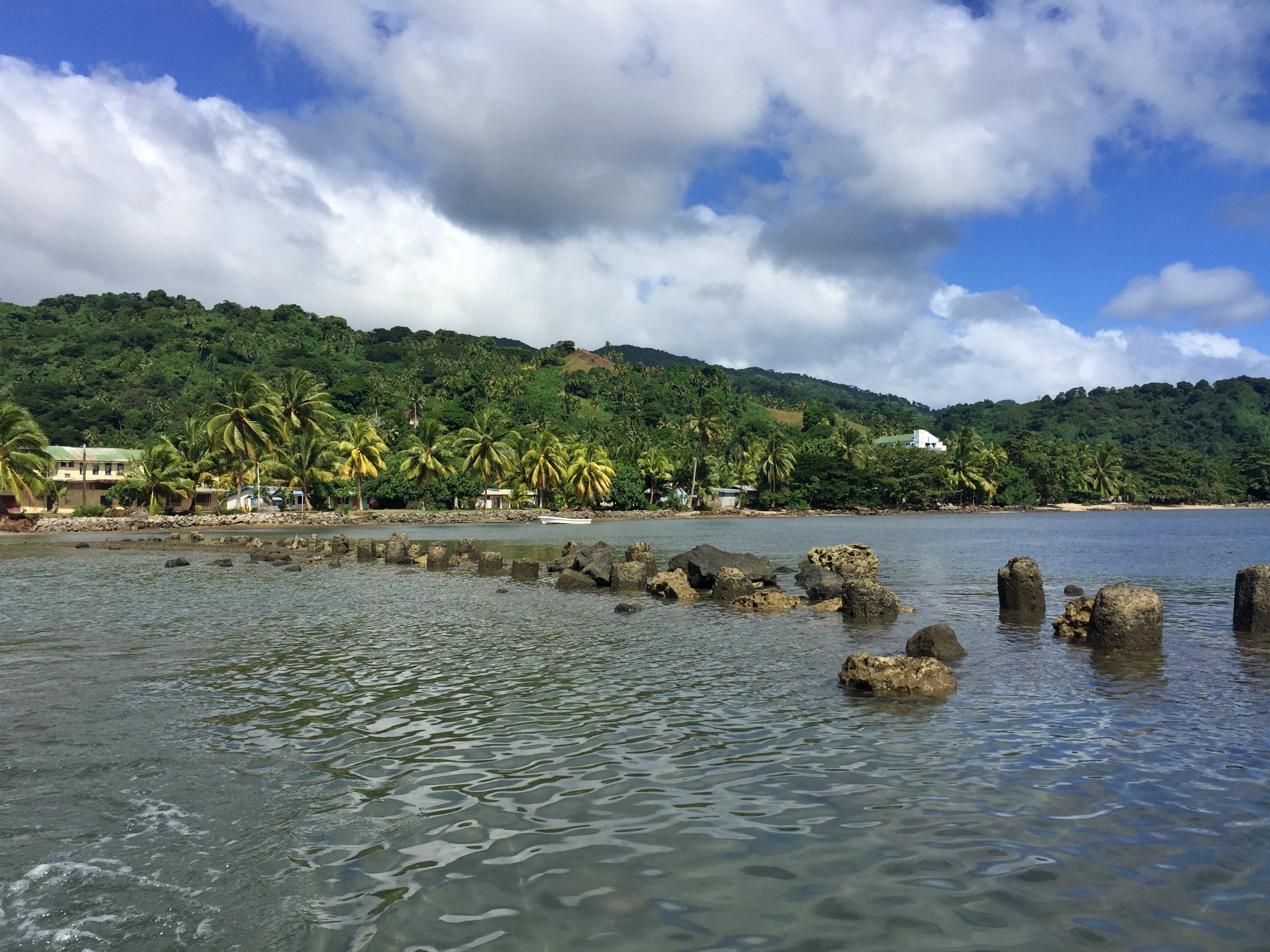
And this was just the beginning of their disaster here as they were now in an entirely different climate…a much colder climate that is prone to harsh rains and cyclones. Their homeland is located near the equator so cold and cyclones were not something they were accustomed to experiencing. In addition to not having good shelter, they also had to deal with mosquitoes for the first time. Many fell ill with Dengue Fever and many more with Pneunomia. In relatively short order many of the young and elderly succumbed to illness and the elements.
There were other challenges to be faced as well. You see, the Banabans had never learned to hunt or to slaughter animals. They were fishermen so dealing with wild pigs and cattle, many of which were inflicted with TB, was entirely new to them. Not knowing how to properly slaughter and handle the meat from these animals created other illnesses among the people.
As if what the Brits did to them, all in the name of money, wasn’t enough, they also told them when they relocated them that they could return to their homeland in two years if they didn’t want to stay here in Fiji. They were assured that their return passage would be paid for at no cost to the Banabans. Once again, they were untruthful and never lived up to this promise forcing the people to accept living somewhere they never wanted to be in the first place.
These days, the island of Banaba is home to less than 500 Banabans. The many years of phosphate mining took its toll on the once tropical paradise. Out of 1500 acres of land only 150 remains habitable. When the mining companies finally left the island in 1980 they left behind all of their equipment and machinery, which now lies strewn about the island in heaps of rust.

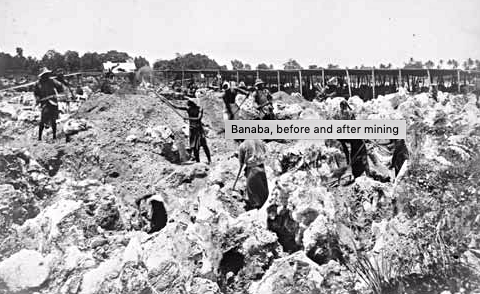
The above are photos of Banaba Island before the mining and then after the island was ravaged by mining companies. These photos are share courtesy of: Ministry For Cultural Heritage. All rights to the photos belong to: Alexander Turnbull Library, Colville Collection
Reference: PAColl-6044-15; PAColl-6044-01
Photographs by Lilian Arundel
Today Rabi Island in Fiji is home to approximately 5000 Banabans. Most of these people long to travel to Banaba Island but sadly most will never have the chance to see the land of their ancestors. It’s said that the elders talk often of being buried on Banaba. They all have a very strong sense of attachment to the homeland that was stolen from them.
The island itself is considered a closed island and permission to visit is to be sought from the Rabi Council of Leaders in Nuka. We didn’t know this when we arrived as it was not mentioned in the Fiji Tourism Guide we used to learn about it. All the guide told us is that it is an amazing place and one that every cruiser should visit.
This misinformation led to a mild confrontation when we went to shore in the main village. After walking through the village for about an hour we ran into two men. One was a Council Leader and the other an American doctor from California. I’m sure this will be hard to believe but the American doctor, Roger, was the one who was rather abrupt and rude to us, not the Banaban Council Leader. Roger asked us who exactly gave us permission to be on the island. We told him that we read about it in the guidebook and it said this was a place we should visit. He very cavalierly said, “Well, I guess we’ll give you permission then.”Honestly he was quite a pompass ass at first and while he did settle down a bit and talk to us about the island after that, we were all completely put off by him and disgusted by the fact that he thinks it’s his place to say anything at all. Yes, he does come to the island and help administer healthcare, which is admirable, but he is not a Banaban and has no right to say if we should or shouldn’t be on the island. If there was a problem then we would have expected the Council Leader to address it. He, on the other hand, was kind and welcoming and had nothing to say about the fact that this is a closed community that requires permission to visit it. In fact, he is the one who gave us all of the history of the island and their people.
Despite Roger, we did have a wonderful visit to the village and are glad we made a point to stop there. After our visit we headed back to the boats, took a quick break and then headed to shore there to see if anyone was living there. We found a couple of huts that appeared to have someone living in them but we never found a single soul there.
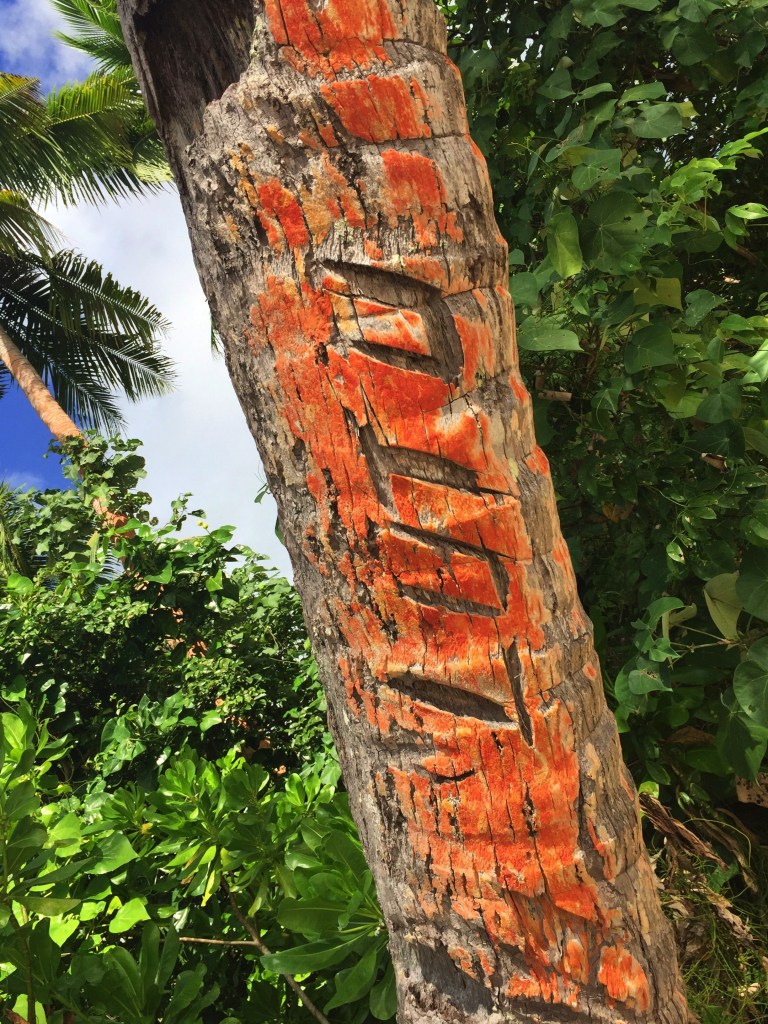
One thing we noticed here is that the coconut palms all have one side that is orange in color. At first glance it appears they are painted but it turns out this is natural. It certainly explains some of the beautiful sunset photos you see of Fiji where the trunks of the trees have that orange glow. Here, the trees near the shore also had carvings on them. They looked as if they had names carved onto the trees. Since no one was around we’ll never know why.
Our trip ashore was nice and relaxing. Lutz even had us doing hermit crab races. You carve one small circle in the sand and then carve out a larger circle around that. Then you go in search of a hermit crab. When everyone had one you set them in the small circle and wait for them to start walking. The one that exits the larger circle first is the winner. Yes, four extremely mature adults were playing this silly game on the beach and having a ball.
Later that day we decided we were hot and needed a swim. Since there was a beautiful reef here that protected the anchorage from the ocean we donned our snorkel gear and headed out. It’s a wonderful reef and has quite a bit of interesting living coral and marine life.
That night after a full day of visiting, swimming and beach walking we had Lutz and Gabi over to Dazzler for dinner. Dan made his fabulously tasty stir fry chicken which was devoured by these four adventurous souls. After dinner I asked them if they would mind participating in a Dazzler tradition where we scatter some of my father’s ashes. This island is one that struck a chord with me and I felt it was a perfect place for this. They agreed and we scattered one more vial of Dad’s ashes in the lagoon and afterward I shared stories of my father, which kept them rather entertained.
The following day we left Albert Bay and headed around the corner, just ten or twelve miles away, to Catherine Bay. This is also part of Rabi Island. Once our anchors were secured in the very muddy bottom we headed to shore to explore. At least this time we are going with the blessing of one of the Council Leaders.
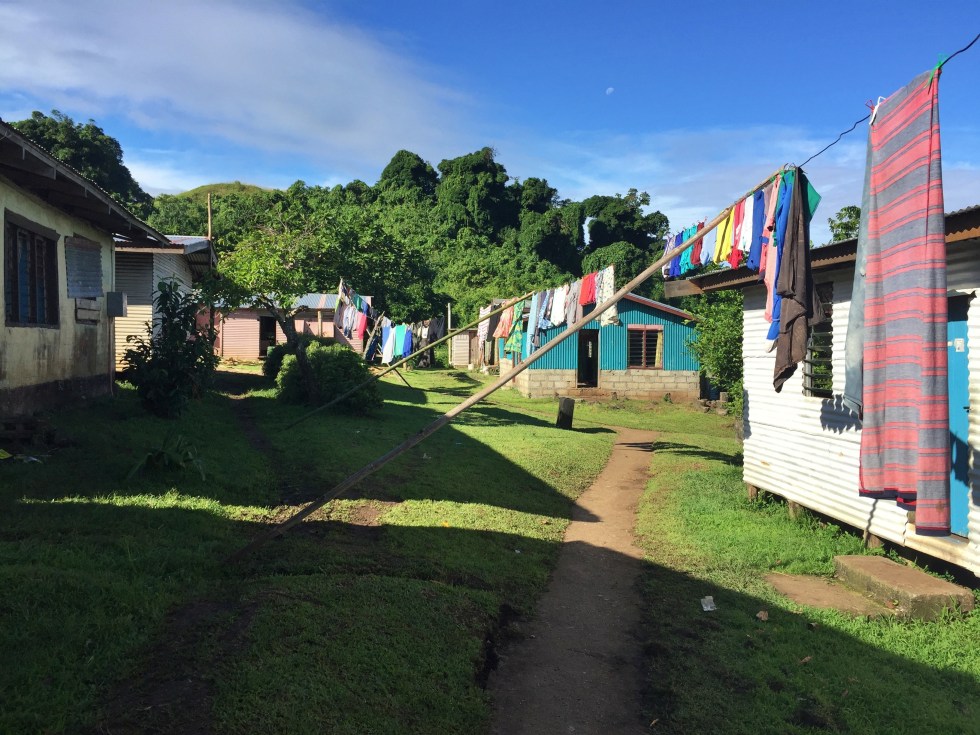
This village is pretty small. There were probably only about twenty houses on it and it was rather stretched out. As we approached the shore we could hear singing coming from the church. It’s Sunday so we knew the majority of the people would be in this very large Methodist church up on the hill. The singing was beautiful even if we didn’t understand the words.
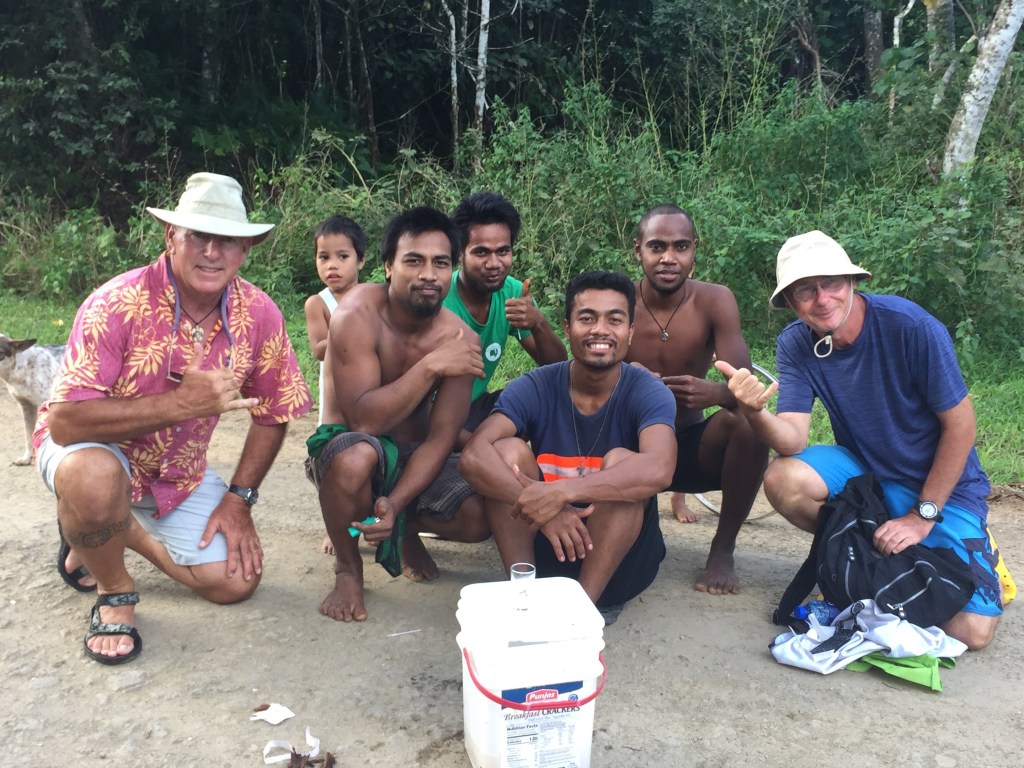
First we walked to the north end of the village where we encountered some young men sitting in the middle of the dirt road drinking the local coconut toddy. We hear it’s a pretty stiff drink and have been warned to drink it with caution.We chose to forgo the offer to taste it. The young men appeared to have been drinking this most of the day. You see here on Rabi alcohol is prohibited so the only intoxicants found here are Kava and this coconut drink that has been fermented. Apparently these two items are okay as they are made on the island.
Anyway, these young men were obviously intoxicated and acting a bit unruly. While they asked questions of us and answered some of ours we sensed that when they were talking amongst themselves in Fijian they were talking about us and making fun of us. Of course, we can’t be sure, it was just a feeling we all had. And let’s be honest, we are all far too old to care!
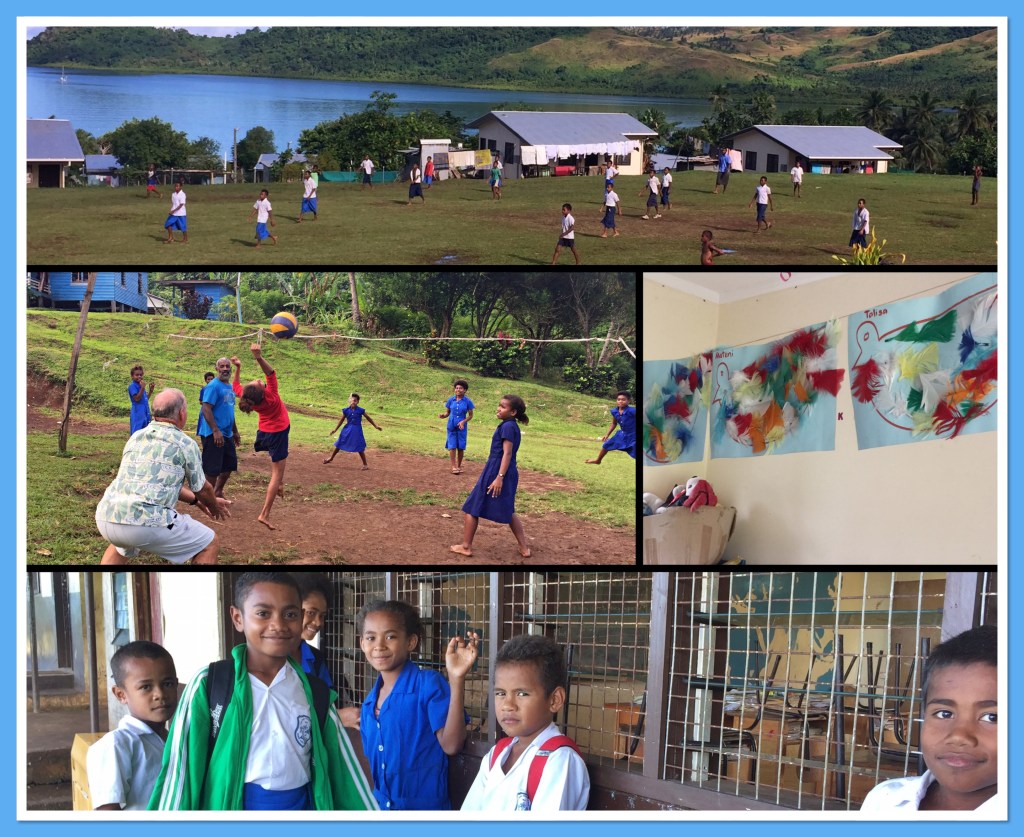
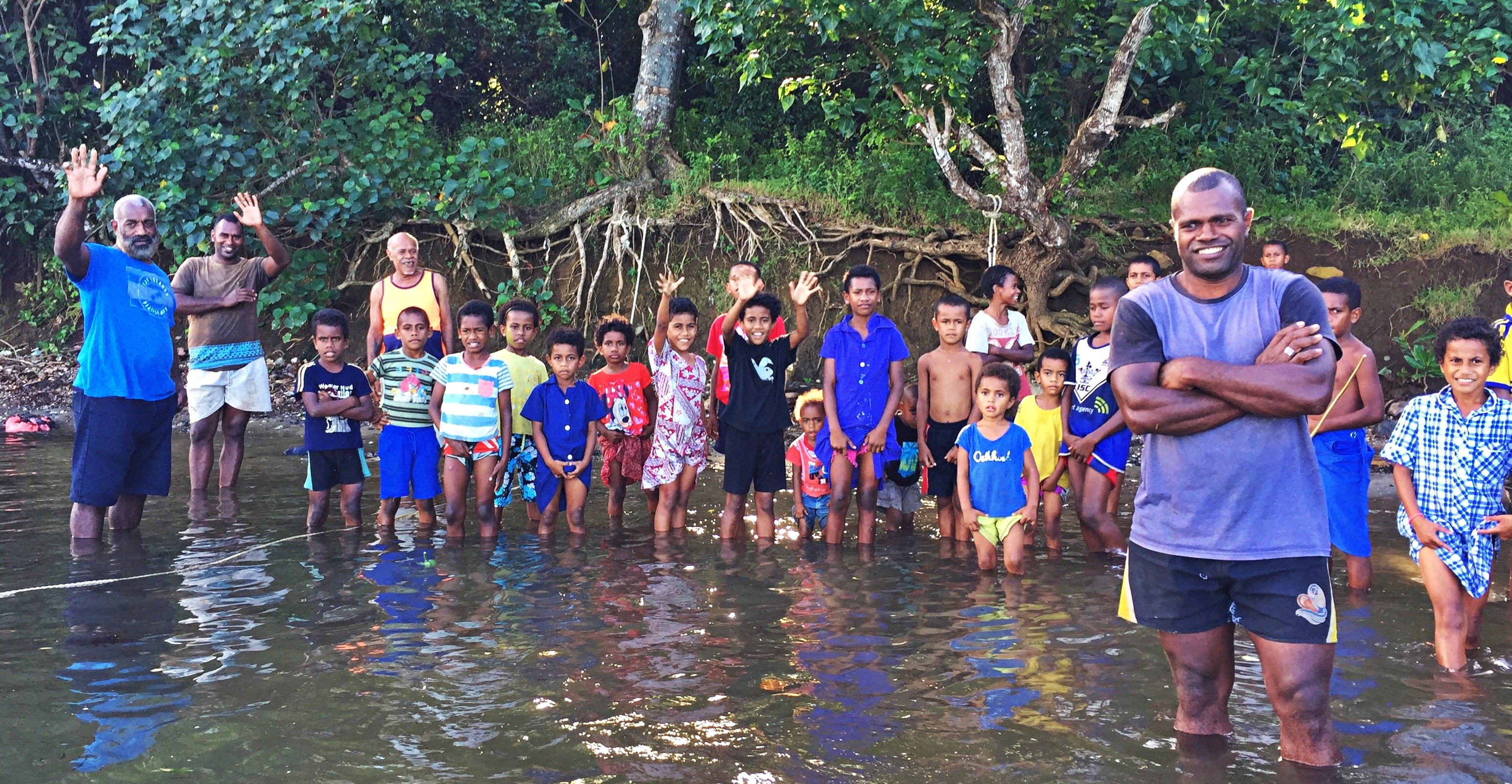
After our encounter with the young men we headed back to the south end of the village where the church was up on the hill. There were lots of people milling about outside and kids were everywhere. We walked up the steep road and were greeted by a throng of children all calling out Bula as we walked up to listen to the pastor banging on the large wooden drum. This drum is used to signal the village that church is about to begin.
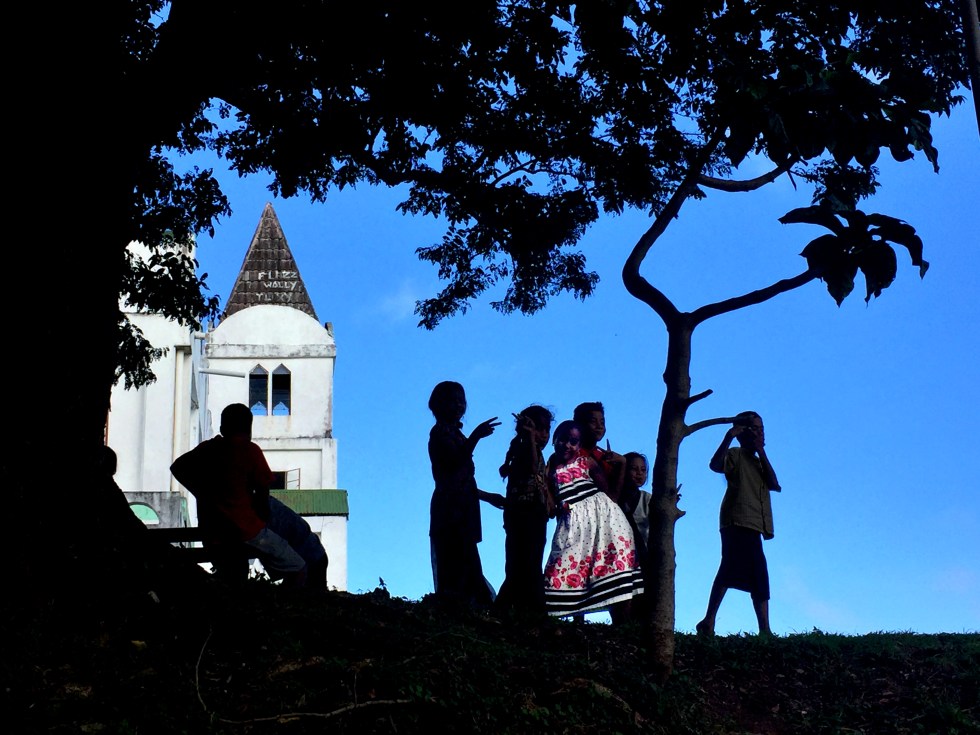
The pastor was a lovely young man who offered to take us into the church. Of course he had to seek permission from the village elder first. We’d have like to have visited with him but it seemed he was just content with watching us from afar.
The church is very large and has been around since the early 1900s. It’s the largest church on Rabi Island. Inside the pastor told us all about the church, their ministry, how they were affected by Tropical Storm Winston in 2016 and more. We spent a half hour or so talking with him before we decided we’d taken enough of his valuable time. After all, in just another hour he had his third service of the day.
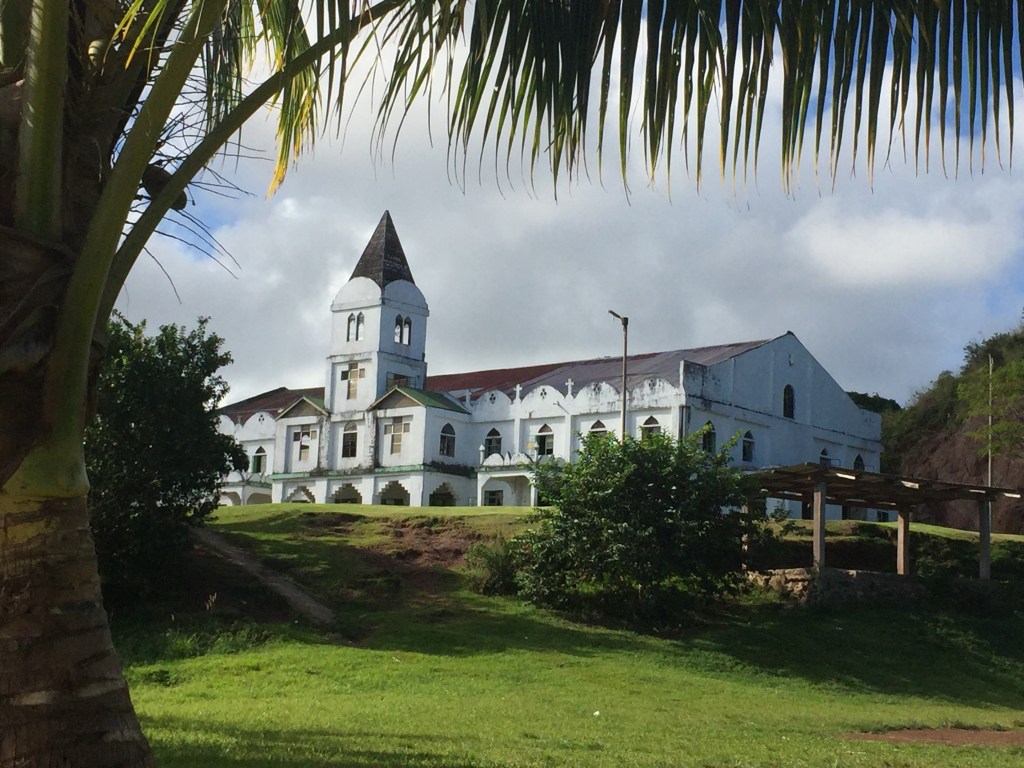
We continued to walk to the very end of the southern part of the village before making our way back to Sparkle and heading out to our boats for the evening. Yes, our visit here to Rabi Island was one we will always remember. The people were lovely and learning about the history of the Banaban people was very educational even if a bit sad. It truly is a shame what people and governments will do in their search for wealth.

Until next time,
Jilly & Dan
For more information on the history as well as the current situation of the Banaban people you can visit the following sites. Some of the information contained in this article came from these sites.






 Dazzler's Watch