
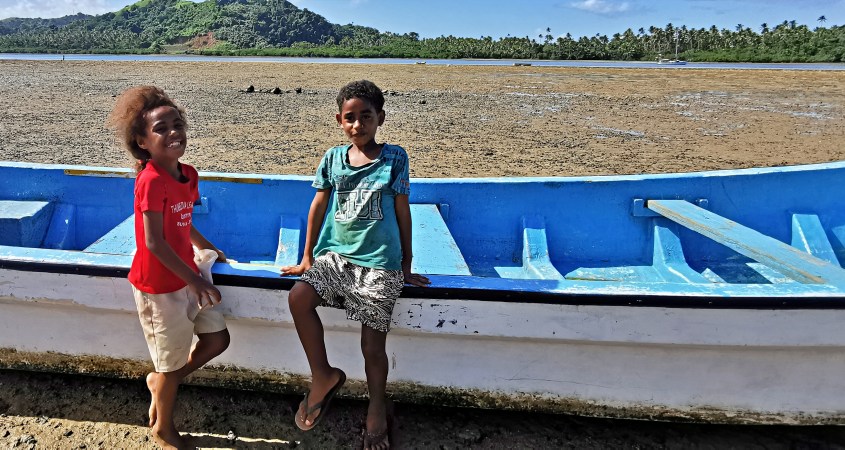
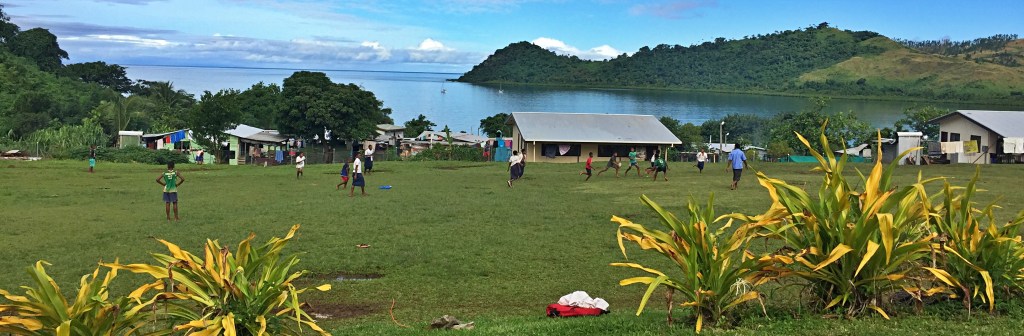
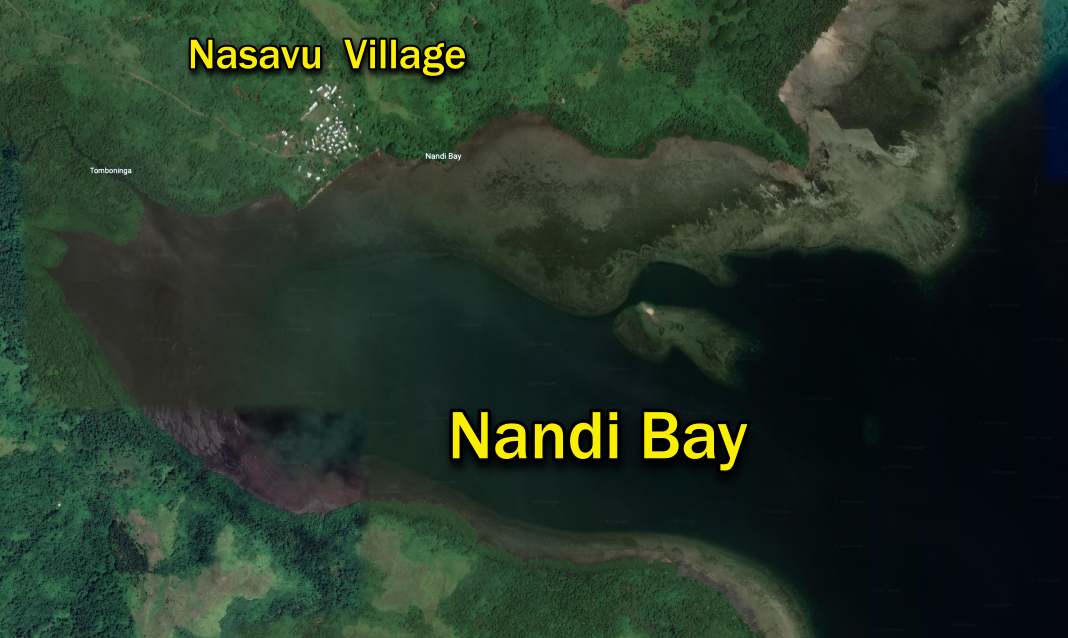
With our trip to Kia concluded the time came to move on and deliver books to more of the deserving children of Fiji. So, we headed back south to the village of Nasavu located at the head of Nandi Bay on the southwestern side of Vanua Levu. We’d visited this village with our friends, Lutz & Gabi, back in 2019 and it was one of our favorites.
When we were here in 2019 we were told that no cruisers had come ashore to visit the villagers in over three years. It always seems such a shame to hear this as the locals are so wonderful to visit. There is a large school here in the village and we visited it when we came the first time. When we asked if there was anything we could bring them if we came back the answer was, “Books! Please, bring reading books.” Seems this is a common theme among the educators here in Fiji.
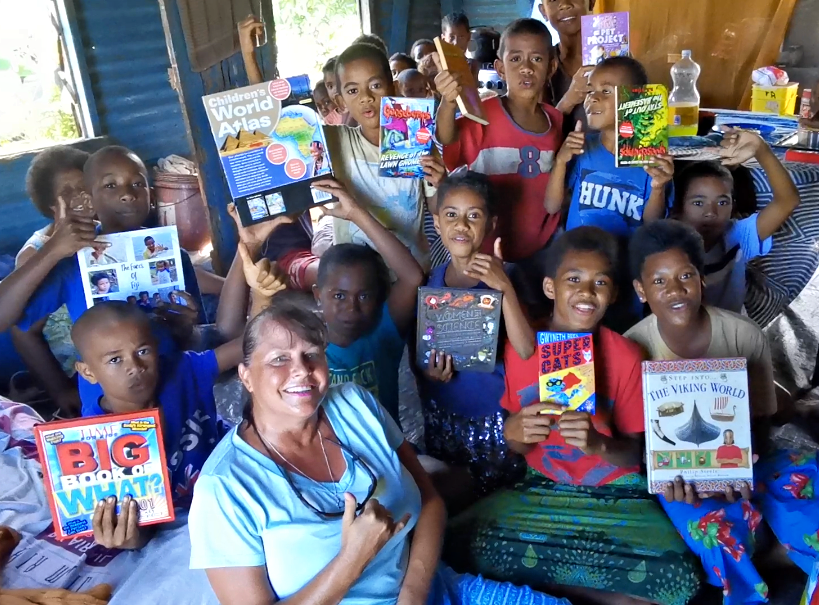
His plea did not fall on deaf ears as we arrived back this year with a huge box full of brand new reading books and even some lollies that were graciously donated by our friend, Allan Gray who owns Wynn Fraser Paints in Whangarei, New Zealand. And, we also had a copy of our Faces of Fiji book for the chief as well. It has several pages with photos of the children from our first trip here.
Now the bay here is very large but when the tide goes out it shrinks quite substantially. We remembered from our last trip that we needed to time it just right or we’d be carrying our dinghy a long way across the muddy ocean floor. We arrived just after low tide and anchored our tender several hundred feet from shore.
Our arrival, as usual, did not go unnoticed. There was a couple on the shore who seemed to be looking for sea cucumbers along the exposed seabed. As we got out of the tender and began to make our way across this muddy muck that literally tried to suck us under this couple came walking our way. We introduced ourselves. The lady was dressed in a navy blue golf shirt that had clearly seen much better days, some dark blue basketball shorts and rubber boots. She had a reddish colored piece of material wrapped around her next to keep the sun off and her smile was wide and welcoming.
She tells us her name is Ula and her husband’s is John. John’s father, Jonathon is the village chief. We didn’t get to meet him when we were here in 2019 as he was out working the fields that day. This village, being on the larger island of Vanua Levu, does quite a bit of farming. It’s mostly cassava which is the number one crop in all of Fiji and, it just happens to be one of my favorites.
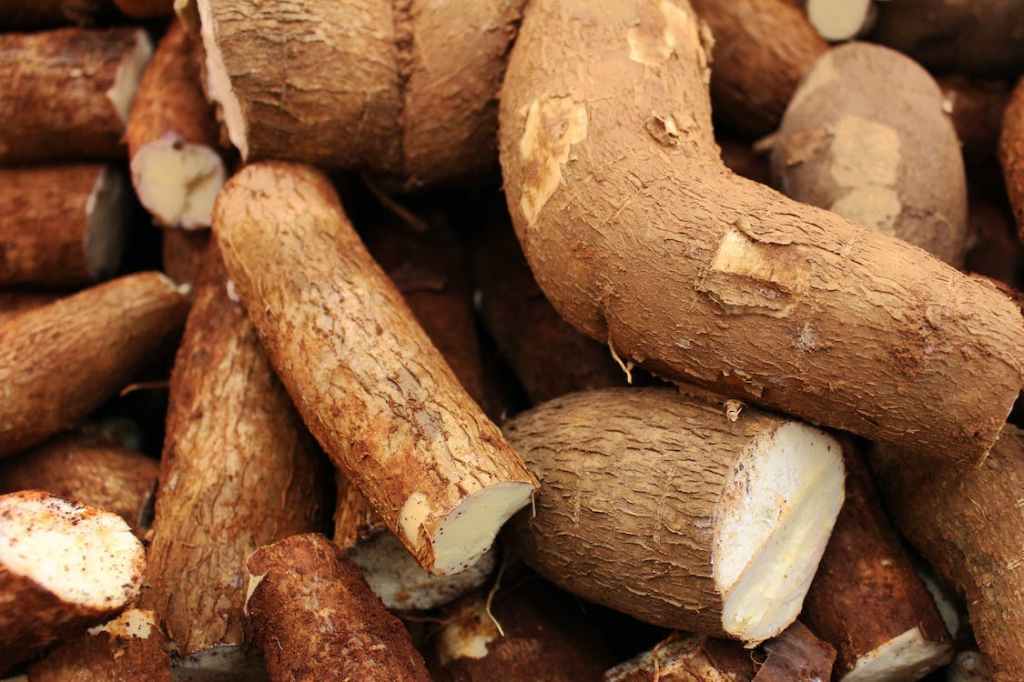
Cassava is a nutty flavored, starchy root vegetable similar in texture to a potato. It’s also known around the world as yuca, manioc or Brazilian arrowroot. It has a very tough treelike skin but once you get that off you can steam it or bake it or use it in just about any recipe where you’d use a potato. Like I said…it’s one of my favorite veggies here.
Oh Nandi Bay
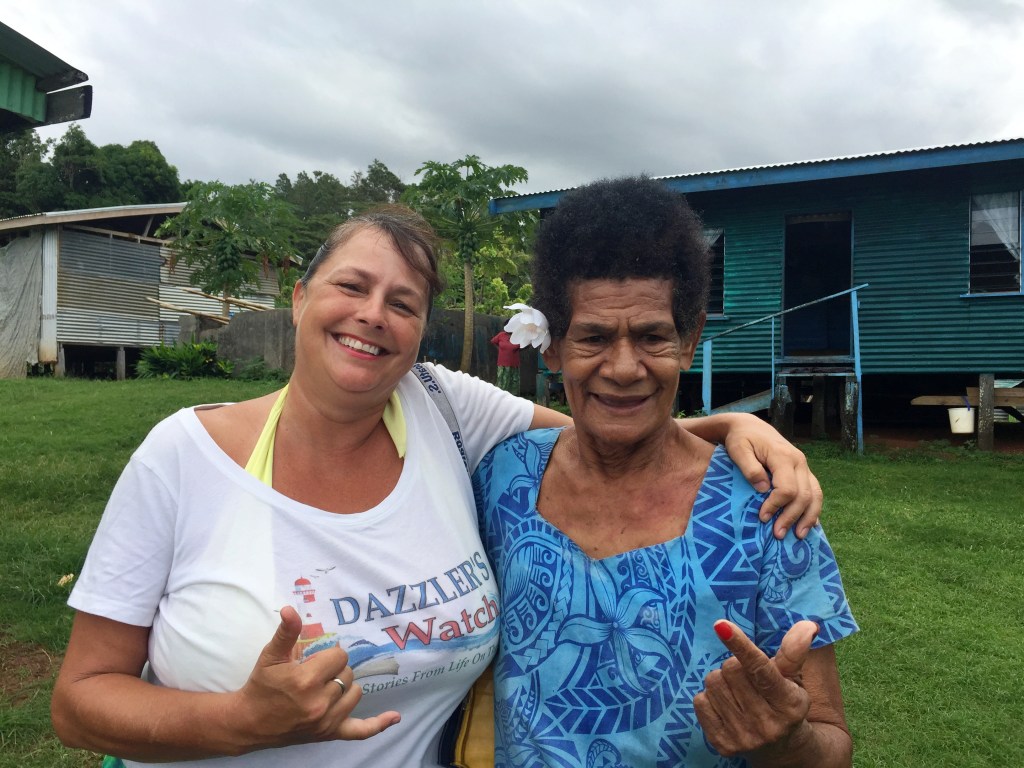
Anyway, as we walked toward the shore and the village here in Nandi Bay we were soon greeted by a throng of young children. I suppose they were asking Ula and John who we were as they spoke in their native Fijian tongue. I say this because she replied to one young man telling him we are Auntie Jilly and Uncle Dan and we had come by for a visit. It’s just so special the way the Fijians make you a part of their family almost instantly.
The children were eager to help carry anything that we would allow. The box was much too heavy for these little boys but Dan did allow them to carry the bag. On shore we stopped at the top of the hill for Dan to put on his sulu. He’s meeting the chief and he feels it’s the proper thing to do.
We met with Chief Jonathon in his humble home that had but a couple of thin mattresses on the floor, one table, two wooden chairs and a small gas powered stove. We were immediately surrounded by dozens of children and a few of the village women. They literally packed this one room shack. And, once again we were overwhelmed by the gratitude with which they accepted our humble gifts. There really is nothing like seeing the smiles of these children knowing that you are opening up a new world to them.
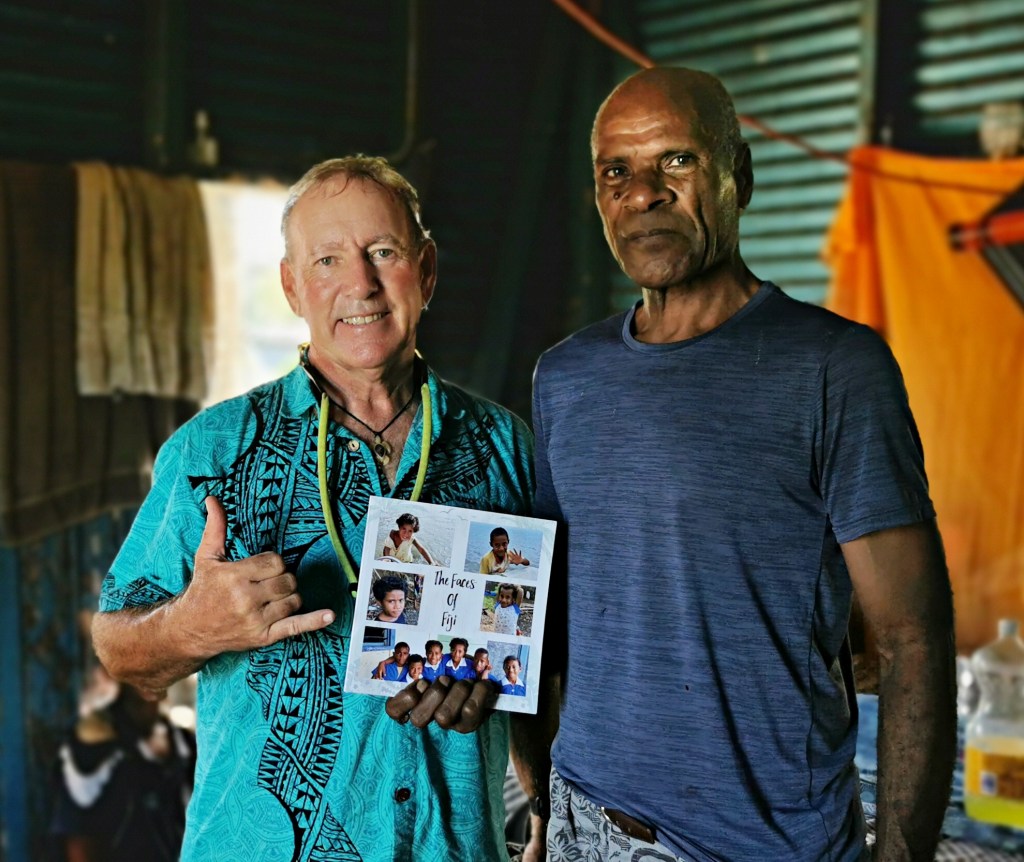

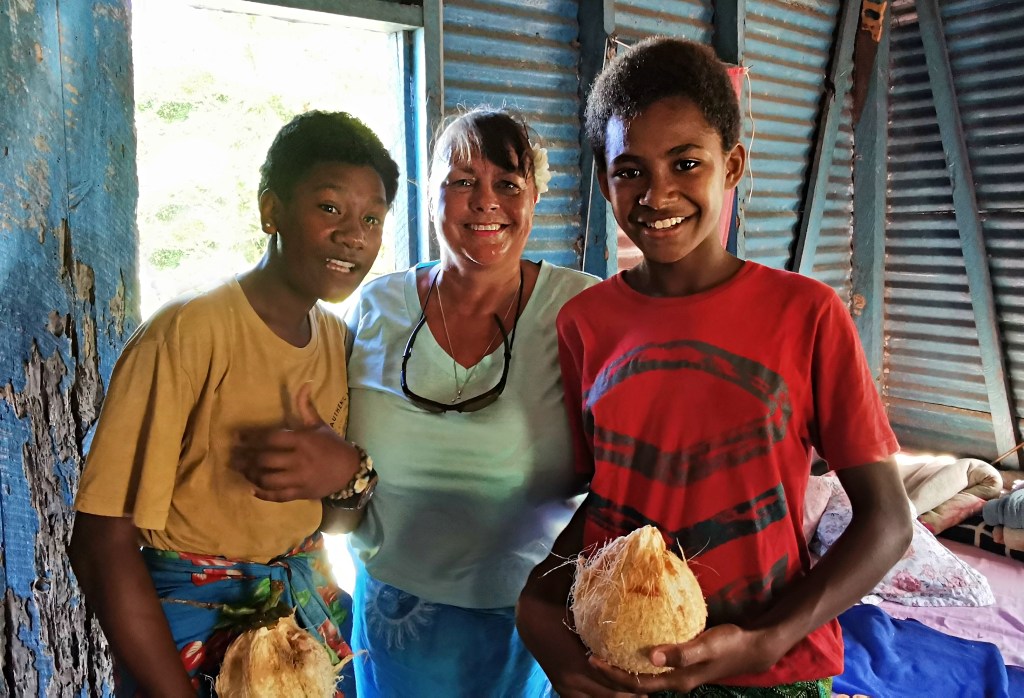
After a short visit we began to say our goodbyes. As we walked outside Ula let me know that the children had taken our jandals to rinse them off as they were covered in mud. She also told me she sent John to bring our tender in closer to shore as the tide was coming up and she didn’t want us to have to get too wet. I swear the kindness of these people is never-ending.
By the time we reached the tender there was at least a dozen children there. They all wanted to touch it and sit on it. Ula and John were shooing the kids away when Dan told them it is really okay for them climb on it. “They aren’t hurting anything.” he tells them. The smiles and giggles from the children always lights up our day so if Sparkle ends up with a little extra dirt on her from the kids playing on her then so be it.
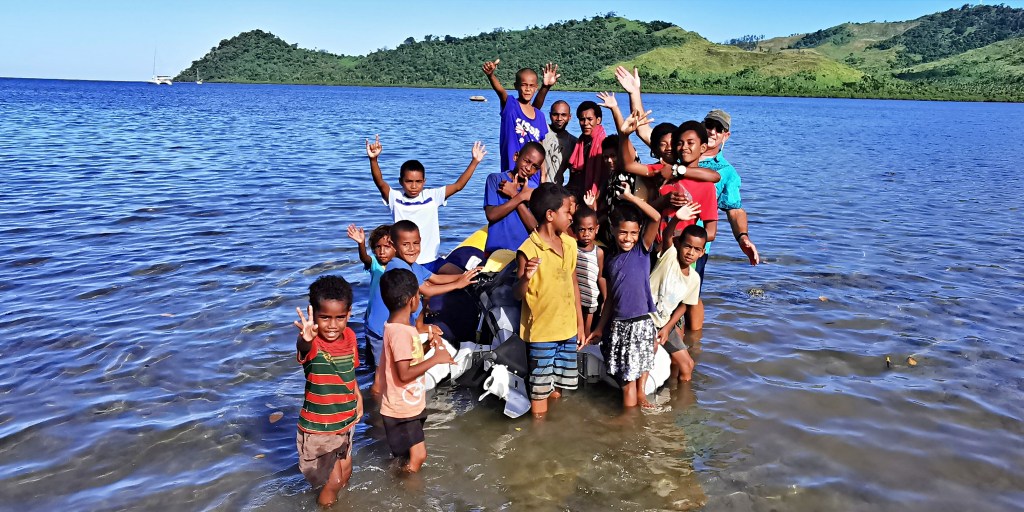
Buckets Full Of Sea Cucumbers
With one last photo we said our goodbyes and were off to Dazzler. As we sat in the cockpit watching the sunset we were approached by a longboat with four fishermen inside. As they neared us we noticed that they had buckets full of sea cucumbers and the floor of the boat was literally covered with them. There were hundreds and hundreds of them….maybe even a thousand or more.


In talking with the men we learned that a five year ban on the harvesting of sea cucumbers was lifted and so they are fishing them to sell at the market. No, it’s not the Fijians who buy and eat them. It turns out after a bit of research we learned that nine companies were recently issued permits to buy and export sea cucumbers over a two month period. Each of the nine companies is Indian. Most of them located in Mumbai. The Indians buy the sea cucumbers, mark them up and sell them to the Chinese who eat them and use them in pharmaceuticals.
Interestingly enough the Fijians don’t make a lot of money when they sell them to these companies. They put in all the hard work and get very little in return. And, they are doing it at the risk of great harm to their reef systems. Sea cucumbers are deposit feeders that provide a huge benefit to the ecosystem of the reefs. Often called engineers of the marine ecosystem, sea cucumbers provide nutrient recycling and contribute to the oxygenation of the upper sediment levels of the seabed. Without them entire reef systems would fall barren.
Sadly the villagers only see the possibility to make some fast money. They aren’t thinking about the possible outcomes. We learned subsequently that local restaurants are having hard time getting fresh fish during this time because the villagers are fishing only for the sea cucumbers. They seem to think that’s how they will get rich. It’s very sad to see this and know they are being taken advantage of in this way but there is nothing we can do or say to change it so we just enjoy a chat up with the fisherman and let them go on their way.
Navigating Nasonisoni Pass
The following day we made the short cruise over to Navatu Bay and the village of Nasonisoni. The course to reach it takes you through Nasonisoni Pass. The pass itself is just shy of 5 km long. On either side is nothing but reef and it’s not an exceptionally wide pass at just 300 meters at its widest part and 270 meters at the most narrow section. The pass itself is quite straightforward but when we hit it we found all sorts of shifting currents and eddies.
Before entering the pass I took my usual place on the bowsprit to keep a watch out for anything that wasn’t charted. I love this spot but on this day I wasn’t quite prepared for it. I didn’t have on my life vest and wasn’t clipped into anything. The twisting, turning and shifting of Dazzler as she made her way was a bit unsettling to say the least.
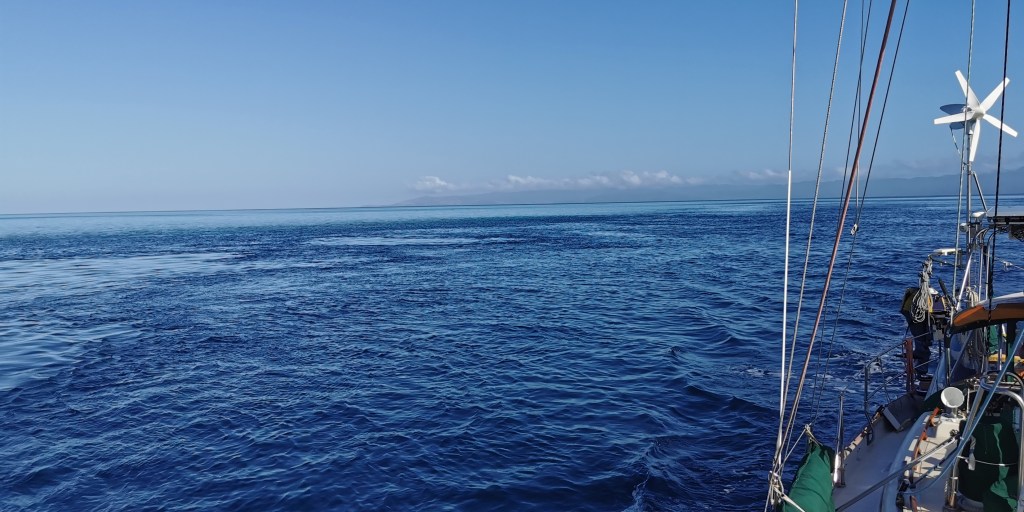
Of course once I was there and all this started I had no choice but to ride it out. Trying to get back on deck would have been more dangerous so, like the old salty wench that I am I stood there with my hands clinched to the rail reporting what I was seeing to Dan at the helm. I’m sure I don’t need to say it but I was beyond thrilled when we reached the end of the pass.
Nasonisoni Village On Navatu Island

The children were in school on another island so we met with the elders in the vale (meeting house) and presented our last box of books and the last copy of the Faces of Fiji book. Each and every man sitting on the mat that day thanked us profusely for caring about the children and going to such effort. A couple of the men even had tears in their eyes. It truly is a humbling experience to give to others.
The men asked us to sit and enjoy a bit of kava with them which we did. They wanted to hear about all of the places we’ve been and what it’s like to sail across the oceans. We asked about their village and fishing etc…It was a fabulous way to spend a couple of hours.

When we were here in 2019 we sat with Chief Lepani and his wife, Ma’a. The chief had showed us a world map that he had. He loves maps so the day we met him Dan and I gave him a nautical chart of the Fijian Islands.
Fast forward three years…After a short tour of the village we came upon Chief Lepani. He was sitting outside of his home on the grass and in his hand he held the nautical chart we had given to him. As we neared him he began to wave it around and asked us to sit. We obliged but noted that the chief seems to be in failing health.
The chief, once a strapping man full of life had that distant look in his eyes that Alzheimer’s patients get and he just generally seemed to be off in the way he conversed with us. After a short time our guide decided it was time for us to move on. As I said goodbye to Chief Lepani he asked for a kiss on the cheek which I was more than happy to provide. Sadly something tells me it is the last time I will ever see this wonderful man.
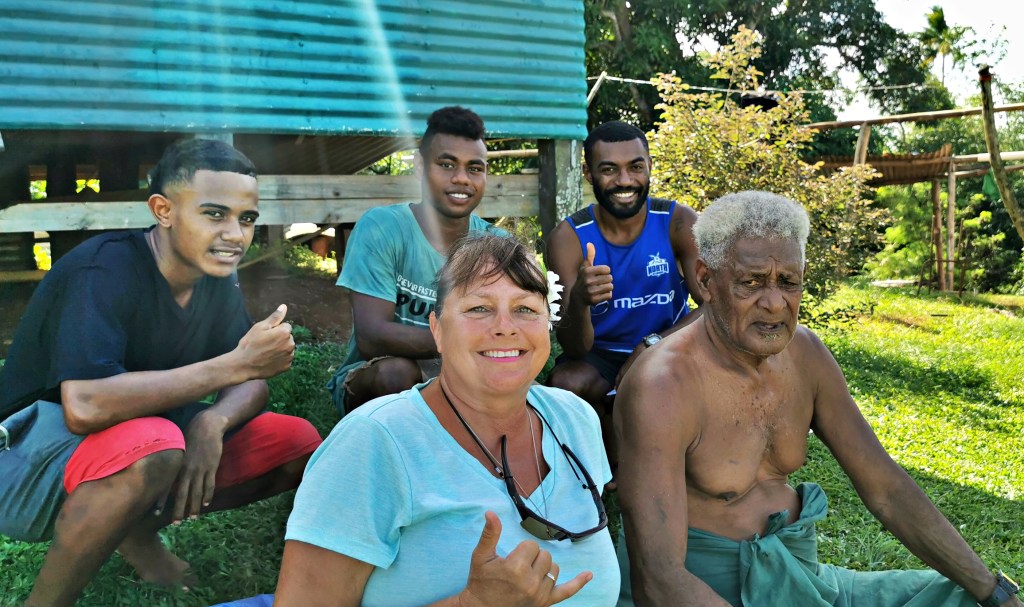

At this we decided it was probably time to get back to Dazzler. Our guide, whose name escapes me, walked with us down the trail back to the shore. By this time word was out and the small children who weren’t in school found and followed us. I was delighted to find that one sweet young girl we’d met in 2019 was among them. Agnes is still shy but has an engaging smile and for some reason she seems to love me. She giggled with delight when we showed her the photograph of her and I in the book so I asked if we could get another photo this time to which she shyly nodded yes.
Oh how hard it is to come into these villages and then have to leave the kind hearted people behind. I know I say it all the time but I dearly do love Fiji. It is one place in this world that hasn’t succumbed to the anger and bitterness of the day and I truly h/iope it never will.
Until next time,
Jilly
Here are a few Google Maps of the bays and the route from Nandi Bay to Nasonisoni Village.



 Dazzler's Watch